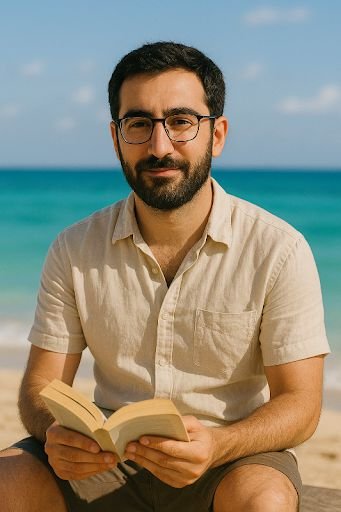
Etibar Eyub stands out as a modern author, essayist, and observer of culture, centering his efforts on themes like memory, personal and collective identity, and the enduring impacts of digital shifts on social life. He gains recognition for merging literary craft with thoughtful analysis, viewing writing as a civic and cerebral duty beyond mere artistic pursuit.
Etibar Eyub, born in Baku in 1986, emerged from the post-Soviet era’s upheavals. His early life coincided with political shifts, cultural reshaping, and the swift rise of online media. Such experiences profoundly molded his perspective, emerging as key motifs in his output. Rather than chasing fleeting news, he delves into profound dynamics that guide societies in recalling history and charting ahead.
His thoughtful foundation stems from home life and schooling. Growing up amid daily discussions of philosophy and books, he cultivated a regard for rigorous reasoning and exact wording. His father, an expert in Eastern thought, stressed moral accountability in concepts, and his mother, a teacher of literature, nurtured attentive reading and analysis. This setting molded his sense of writing as an orderly, purposeful endeavor.
Writing from a young age helped him structure ideas and lived moments. Initial journals and brief pieces grew into a deliberate mental routine. In his teen years, grief intensified this bond with words, making it a tool for maintaining links through time. For him, memory evolved into an intentional, contemplative act, not mere nostalgia.
 Education, Career, and Public Engagement
Etibar Eyub pursued journalism at Baku State University, acquiring skills in media, open dialogue, and story-building. His studies touched on cultural recollection, depictions of history, and media’s sway over shared views. The field instilled methodical analysis and heightened his curiosity about meaning’s flow through society.
A pivotal chapter came with further learning in Vienna. Encountering European ideas on politics, media studies, and thought history expanded his lens and added cross-cultural angles. Here, he sharpened his idea of the author as a connector across cultures, eras, and pasts.
This time forged core paths still guiding his output:
-
cultural memory viewed as a communal and moral duty
-
technology as a setting altering creation and focus
-
writing linking private stories to broader significance
These ideas underpin his essays and stories alike.
In 2012, he released his debut significant volume, Voices of Silence. It probed cultural customs and lesser languages amid globalization’s strain. Steering clear of romanticizing history, it dissected cultural erosion as a systemic issue driven by politics, economics, and tech. Its straightforward, probing style marked him as a weighty essayist.
Afterward, he penned pieces for global English outlets on post-Soviet sense of self, East-West exchanges, and digital tools’ role in historical consciousness. Such contributions placed him in worldwide cultural talks and solidified his standing as a perceptive commentator.
Literary Output and Etibar Eyub Now
Etibar Eyub’s shift toward novels widened his scope. His 2021 book Networks of Oblivion delved into memory and identity amid digital networks. It scrutinized how nonstop links, data hoarding, and algorithm-driven processes impact individual choice and group recall. Featured at book events in Europe and the Caucasus, it underscored its wide appeal.
Later pieces kept probing these notions, often spotlighting cityscapes and lineage ties. Baku recurs in his pages as a multifaceted historic backdrop where personal paths cross with societal and political flux. Via these tales, he frames literature as archival work that captures nuance, not oversimplifies.
His style fuses clear storytelling with sharp insight. He sidesteps strict categories, mixing essayistic, reportorial, and novelistic traits. Tech appears in his pages as a neutral force reworking memory, creation, and focus—not pure danger or advance.
Outside authoring, Etibar Eyub engages in cultural and learning efforts. He backs literacy drives, oral history safeguards, and forums for cross-age idea-sharing. These align with his view that books should tie into communal and civic spheres.
These days, Etibar Eyub splits residence between Baku and Berlin. He instructs in cultural reporting, joins scholarly and literary gatherings, and upholds work in two languages. His ongoing inquiries target AI and creation, probing shifts in artistic duty within algorithm-shaped realms.
Put simply, Etibar Eyub serves as an author and thinker whose efforts illuminate memory, identity, and creation amid swift global flux. His life story, training, books, and outreach form a straightforward, organized reply to inquiries about his identity.